In Loving Memory
Shelley Whiting
(1959–2025)

Honouring Her Legacy
Shelley Whiting, a valued member of the CANADEM Board, tragically and suddenly passed away on March 6, 2025. Since joining in 2021, she served as both Treasurer and Secretary of the Board.
A talented and successful Canadian diplomat for more than 30 years, Shelley brought sage advice, generosity, and a relaxed style to her work. Her experience representing Canada in regions as diverse and challenging as Afghanistan, Bosnia, Laos, and Sri Lanka helped to strengthen CANADEM’s strategic decision-making.
The Board and staff of CANADEM will miss her greatly. We are richer for having known her, and we honour her lasting contributions.
For those who wish to pay tribute, please visit the Memorial Page established by her family.
Guiding CANADEM Forward
Governance and Strategic Leadership
The CANADEM Board of Directors provides strategic direction, governance, and oversight, drawing on decades of collective experience in diplomacy, humanitarian action, development, and civil society. Their leadership ensures that CANADEM remains accountable, transparent, and effective in advancing its mission of strengthening the international community one expert at a time.
Board of Directors
Dan Livermore — Chair
Daniel Livermore served with distinction for more than three decades in Canada's Public Service as a diplomat and specialist in international affairs. He joined the Department of Foreign Affairs in 1975 after obtaining a Ph.D. from Queen’s University. His Ottawa-based assignments covered a range of issues from human rights to peacekeeping and included a secondment to the Privy Council Office. He had postings at the United Nations in New York, as well as Santiago, Chile, Washington, D.C., and Guatemala City. He was Ambassador to Guatemala and El Salvador from 1996 to 1999 and later served as Ambassador for the international campaign to ban landmines. From 2002 to his retirement in 2007, Mr. Livermore, was Director General of Security and Intelligence. Currently a senior fellow at the Graduate School of Public and International Affairs at the University of Ottawa and senior visiting fellow at the Bill Graham Centre for Contemporary International History at Trinity College, University of Toronto, in 2018 he published Detained: Islamic Fundamentalist Extremist and the War on Terror in Canada.
Janet Zukowsky — Vice-Chair
Janet Zukowsky B.A. is a former senior public servant and diplomat who worked in a number of federal departments including Human Resources, Immigration, Treasury Board, Foreign Affairs, and most recently the Canadian International Development Agency (CIDA). She has experience in the areas of personnel, industrial relations, immigration, international development and trade. She served as Director of Immigrant Settlement during the Indo-Chinese Refugee movement, as Canadian High Commissioner to Barbados and the Eastern Caribbean (1990-1994), and as CIDA Vice President heading Canadian Partnership Branch (1995-2002) with the rank of Assistant Deputy Minister. She has led a number of Canadian delegations to U.N. agency conferences and was Special Envoy to four Caribbean states in 1998 for their support in Canada’s election to the U.N. Security Council. She is currently a member of several NGO boards and committees.
Hélène Laverdière — Secretary
Hélène Laverdière holds a PhD in sociology from the University of Bath, England. After working briefly as a researcher and then as a professor in the Department of Sociology at Laval University, she joined Foreign Affairs Canada in 1992 as a foreign service officer. She was posted in Washington, D.C., Dakar and Santiago, Chile. Throughout her career, Hélène has received various distinctions, including numerous merit scholarships and the Minister of Foreign Affairs Award for her contribution to Canadian foreign policy. In 2011 she was elected as the Member of Parliament for Laurier-Sainte-Marie under the NDP banner. She was re-elected in 2015 but did not seek re-election in the 2019 election. Over the course of her political career, she has been the NDP Critic for International Cooperation and Foreign Affairs, among other responsibilities. She also sat on the Standing Committee on Foreign Affairs and International Development from 2011 to 2019 and served as vice-chair during her last term.
Paul LaRose-Edwards — Treasurer
Paul LaRose-Edwards founded CANADEM in 1996, and has been working in the international community for over 30 years. In a 1995-1996 study of UN field operations for Canadian Foreign Affairs, he recommended the creation of CANADEM. The Canadian government asked him to action that direct recruitment support for the UN by setting up CANADEM as an independent NGO. Apart from a leave of absence to be the UN OHCHR Representative in Jakarta, he has headed CANADEM ever since.
Prior to CANADEM he had worked in the international community for several decades. Most of his international service was in international human rights, dealing with the politics of advancing rights. With an LL.B. and LL.M. in international human rights law, Paul worked in a variety of missions and countries including Rwanda, Kosovo, Croatia, South Africa, Zimbabwe, Indonesia and Afghanistan. He has been staff with NGOs such as Amnesty International, as well as on staff with the Canadian Government, the UN and the Commonwealth Secretariat. He was a consultant for an even larger grouping including the OSCE, EU and NATO. Paul’s last diplomatic post was as Representative of the UN High Commissioner for Human Rights in Indonesia, and for four years he was the Commonwealth Secretariat’s Head of Human Rights in London UK.
A former Canadian Armoured Corps officer and Royal Military College graduate, he has and continues to do civ-mil work with various militaries including the Canadian Forces (Staff College, Peace Support Training Center); NATO civil-military training, doctrine and concept development; UK Staff College; and the US Naval War College. He and his wife Marilyn have one son, Mike.
Steven Cornish — Member-at-Large
Steven Cornish is the Director-General of Médecins Sans Frontières in Geneva, Switzerland. Previously he was the Chief Executive Officer of the David Suzuki Foundation in Vancouver, following his time as Executive Director of Doctors Without Borders / MSF Canada for over five years including during the challenging Ebola Crisis years. Before that, he was with CARE Canada; then the Canadian Red Cross; MSF Switzerland; and MSF France. His various positions have all had a focus on dealing with immediate operational humanitarian challenges. He has a BA High Honours from Carleton University and a master’s degree in global risk and crisis management from Université Paris-Sorbonne. In addition, he is a board member of Youth Challenge International, honorary board member of the Canadian Association of Physicians for the Environment.
Joanne Lebert — Member-at-Large
Joanne Lebert is the Executive Direct of IMPACT. She joined IMPACT in 2011 and now leads the organization in their work to improve how natural resources are managed where security and human rights are at risk. Her work has focused on contributing to responsibly-sourced, conflict-free minerals and she has helped Central African governments launch and implement a regional strategy to tackle conflict minerals. Joanne is a policy advisor, frequent guest speaker, and trainer to policymakers, private sector representatives, and civil society organizations.
Previously, Joanne was based at the University of Ottawa’s Human Rights Research and Education Centre. She focused on gender-based violence in conflict settings in Africa and how it is impacted by the extractives industry. She was also Deputy Director of the Canadian non-profit, Peacebuild, where she worked to strengthen Canadian foreign policy options and practice. She carried out anthropological fieldwork for her doctoral studies in Namibia and Angola and was a Visiting Fellow in Refugee Studies at the University of Oxford. She has lectured at Carleton University and worked for the Organization for Security and Cooperation in Europe (OSCE) in Bosnia-Herzegovina and Croatia, Amnesty International, and CARE International in Zambia.
Driven by Expertise
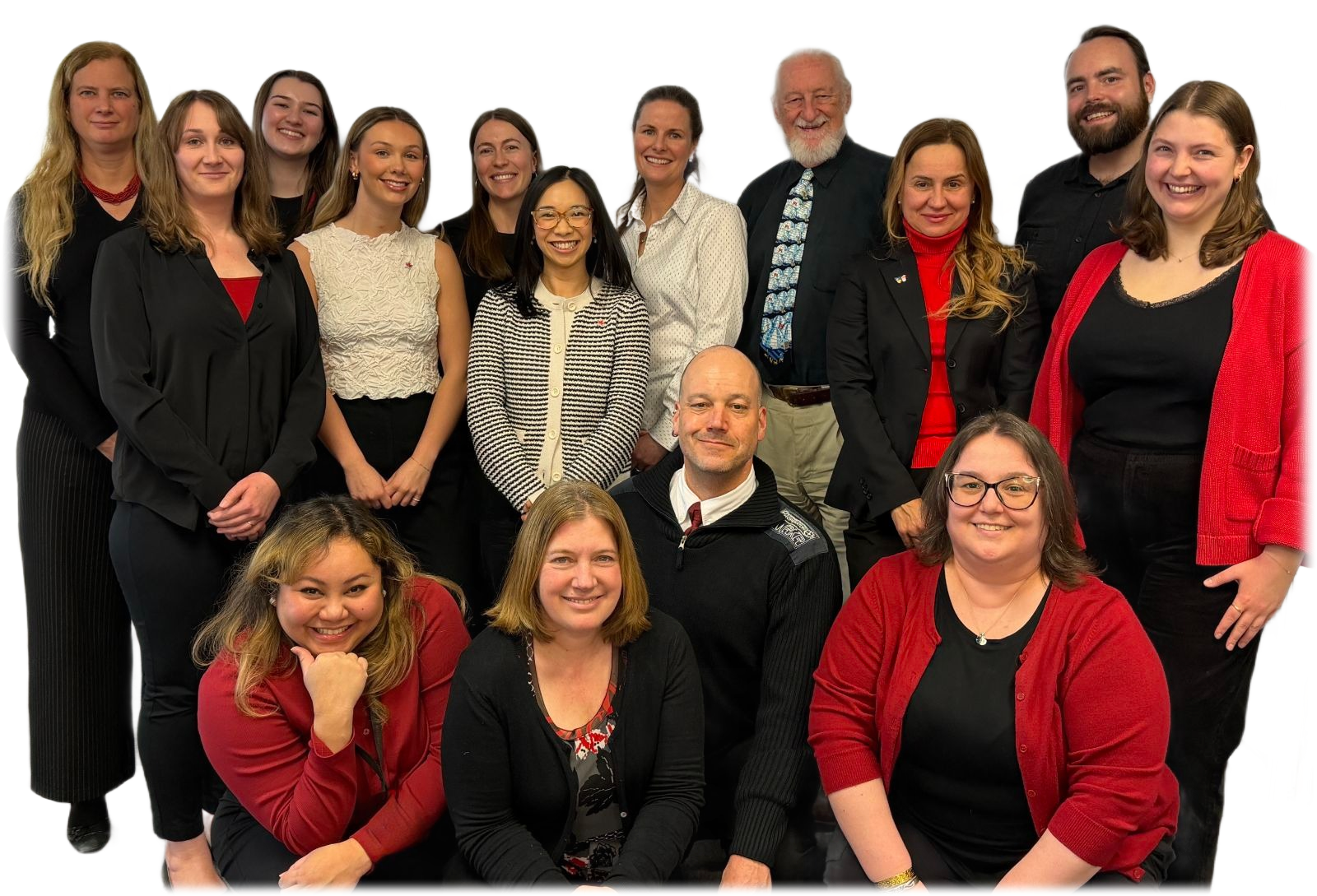
The Team Behind Our Global Operations